

A Complete Step-by-Step Guide to Group Travel and Vehicle Selection
Booking group transport or securing a luxury coach charter in Johannesburg can quickly become a logistical nightmare.
Get it wrong, and you face overpriced rates, late departures, or an uncomfortable vehicle. Get it right, and your entire group moves seamlessly—on time, safely, and within budget.
In South Africa, over 60% of corporate travel planners and tour organizers try to book bus hire less than two weeks before their event. As a result, many face limited fleet options, higher rates, or compromised vehicle comfort.
This complete coach charter booking guide covers everything you need to know before reserving your vehicle. Looking for reliable group transport? Book directly through our main Coach Charter Johannesburg service page.
What You Will Discover: Learn how to select the right bus size, calculate real charter costs, review driver safety rules under South African law, and avoid hidden toll or permit fees.
Table of Contents: Fast Navigation
Click any chapter link below to jump directly to that section:
Chapter 1: Private Coach Travel vs. Scheduled Transport
Explore the operational differences between private group charter and fixed public transit, including routing freedom, custom departure times, and the tailored transport options on our Coach Charter Johannesburg service page.
Chapter 2: The Fleet Selection Matrix: Matching Group Size to Vehicle Class
Compare seating capacities from 7-seater minivans to 60-seater luxury coaches using our quick decision matrix.
Chapter 3: Common Group Travel Use Cases in Gauteng
Discover route logistics tailored for Sandton corporate shuttles, OR Tambo airport transfers, school trips, and Kruger safari tours.
Chapter 4: Onboard Amenities, Food Rules & Entertainment Connectivity
Review climate control standards, USB charging ports, media screens, and food guidelines for charter trips.
Chapter 5: Luggage Capacity & Restroom Logistics
Calculate under-floor bay space vs. luggage trailers and learn when your itinerary genuinely requires an onboard toilet.
Chapter 6: Driver Safety Regulations & NRTA Compliance
Understand Professional Driving Permits (PrDP), vehicle fitness certificates, and mandatory legal rest breaks under South African road law.
Chapter 7: How Bus Hire Pricing Works: Rates, Mileage & Hidden Costs
Break down daily flat rates vs. per-kilometer pricing, toll fees along the N1/N3/N4 highways, and driver accommodation allowances.
Chapter 8: How to Vet a Reliable Charter Operator in Johannesburg
Spot red flags online, verify Passenger Liability Insurance policies, and confirm valid operating permits before paying a deposit.
Chapter 9: Step-by-Step Booking Timeline & Pre-Trip Checklist
Follow a 5-step departure checklist and lock in vehicle availability during peak Gauteng travel seasons.
Chapter 1: Private Coach Travel vs. Scheduled Transport
How schedule control, custom routing, and group privacy compare to fixed public routes.
Organizing group travel across Gauteng starts with one fundamental decision: choosing between a private coach charter in Johannesburg and scheduled public transport.
While buying individual tickets on a public bus line might seem simpler at first, it often creates major friction when managing large groups.
To make the right choice for your trip, you need to understand how private charter and public transit compare across:
-
Door-to-door pickup flexibility vs. fixed public terminal stops
-
Custom departure timetables vs. rigid, non-negotiable schedules
-
Direct point-to-point routes vs. multi-stop passenger delays
-
Exclusive group privacy vs. sharing a cabin with strangers
-
Tailored luggage space vs. strict per-ticket baggage caps
In this chapter, we break down the operational differences between private charter and scheduled transport so you can choose the best option for your group’s logistics and budget.
When organizing group travel across Johannesburg and Gauteng, your first major decision is choosing between private coach charter and scheduled public transport (such as intercity bus lines, shuttles, or rail networks).
Many first-time organizers assume booking multiple individual tickets on a scheduled bus line is simpler. In practice, private charter and public transport serve completely different operational needs.

The Core Difference: Scheduled transport sells individual seats on fixed routes with static timetables. Private coach charter hires an entire dedicated vehicle and professional driver working exclusively on your custom itinerary.
Key Advantages of Dedicated Coach Travel
To understand why corporate planners and tour operators prefer private bus charter, consider these five operational benefits:
Custom Pickups and Drop-offs
Public buses operate only between fixed terminals (like Park Station or OR Tambo Airport). A private charter provides door-to-door service, picking up your group directly from your office in Sandton, a hotel in Rosebank, or a private residence.
-
-
Complete Schedule Flexibility
If your corporate meeting runs 30 minutes late or your flight lands behind schedule, a public intercity bus will leave without you. With a private charter, your driver remains dedicated to your group and adjusts to real-time delay changes.
-
Direct Point-to-Point Routing
Scheduled transport makes compulsory stops to pick up other passengers, adding hours to your journey. Private charters drive direct to your destination—whether that is a site inspection in Midrand or a lodge transfer in Pilanesberg.
-
Group Cohesion and Privacy
Traveling together in a private cabin allows your team to conduct confidential business discussions, run event briefings, or bond without external passengers present.
-
Dedicated Luggage Management
On public transport, luggage capacity is strictly capped per passenger. Private charters allocate dedicated under-floor storage bays or enclosed trailers tailored to your group’s exact gear requirements.
-
Private Charter vs. Scheduled Transport Comparison
| Travel Feature | Private Coach Charter | Scheduled Public Transport |
| Departure Timetable | 100% custom to your group | Fixed operator schedule |
| Pickup Location | Any venue, hotel, or office | Designated bus terminals only |
| Intermediate Stops | Only where you choose to stop | Multiple mandatory public stops |
| Passenger Privacy | Exclusive use of the vehicle | Shared with the general public |
| Luggage Storage | Custom capacity / optional trailer | Strict per-ticket baggage limits |
| Billing Model | Single flat vehicle charter rate | Per-person individual ticket price |
Chapter 2: The Fleet Selection Matrix: Matching Group Size to Vehicle Class
Why door-to-door flexibility and dedicated drivers beat fixed timetables for group travel in Gauteng.
Choosing the wrong vehicle size is an expensive mistake.
Select a bus that is too small, and your passengers will sit with bags jammed between their feet. Choose one that is too large, and you waste thousands of Rands paying for empty seats.
To pick the ideal vehicle class for your group, you need to evaluate:
-
Exact seating capacities (from 7-seater minivans up to 60-seater luxury coaches)
-
Luggage storage limits and whether an enclosed luggage trailer is required
-
Onboard toilet necessity based on your total travel distance
-
Vehicle comfort levels matched to short city transfers or long highway drives
In this chapter, we will show you how to use our Fleet Selection Matrix to match your headcount and luggage needs to the right vehicle class.
In essence, the coach charter ranges from 17 seats to 70 seats. As you can imagine, the coach sizes could be quite large complete with unobstructed views through the window. Moreover, the under-carriage luggage compartments are situated right underneath the Passengers. However, these compartments usually has a capacity ratio of 1 to 1.5 luggage pieces per person. Therefore, it is advisable to travel compact and light. Having all this information upfront, can be very helpful when booking your coach charter tour.
How to pick the exact vehicle size for your headcount, baggage, and trip distance
Choosing the wrong vehicle size is an expensive mistake. Select a bus that is too small, and your passengers will sit with bags on their laps. Choose a bus that is too large, and you waste money paying for empty seats.
When evaluating luxury coach travel in Gauteng, charter vehicles generally fall into three distinct size categories:
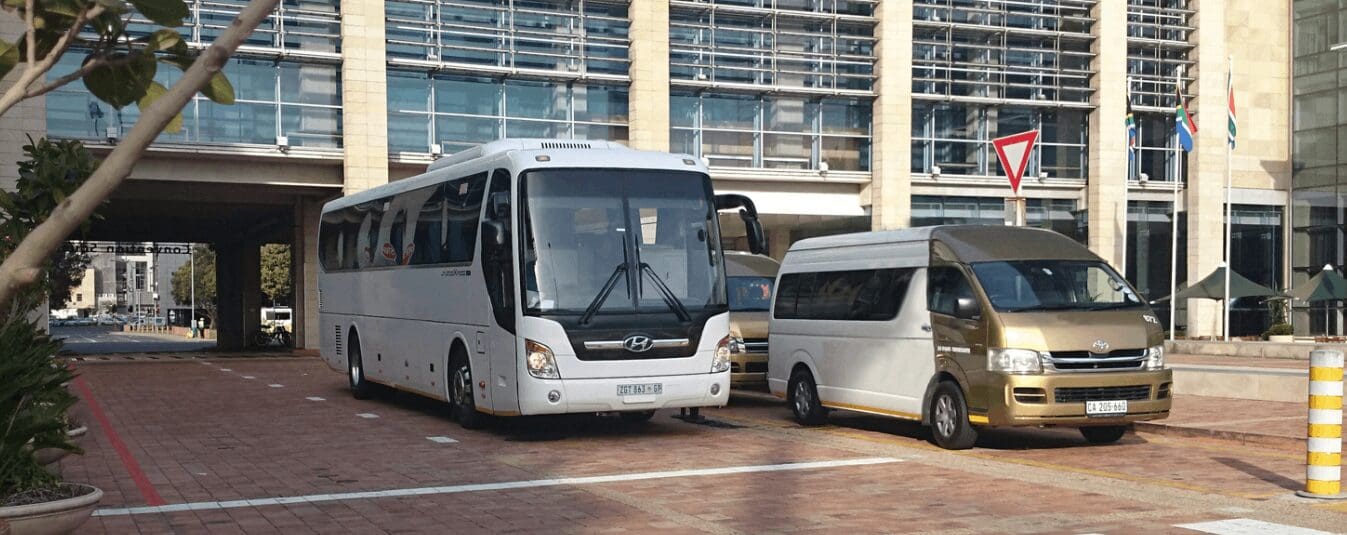
In essence, the coach charter ranges from 17 seats to 70 seats. As you can imagine, the coach sizes could be quite large complete with unobstructed views through the window. Moreover, the under-carriage luggage compartments are situated right underneath the Passengers. However, these compartments usually has a capacity ratio of 1 to 1.5 luggage pieces per person. Therefore, it is advisable to travel compact and light. Having all this information upfront, can be very helpful when booking your coach charter tour.
1. Executive Minivans (7 to 14 Seats)
-
Best For: Airport transfers, small executive teams, and VIP shuttle runs across Sandton or Rosebank.
-
Storage: Limited boot space. If 10 or more passengers carry large luggage, requesting an enclosed luggage trailer is essential.
-
Onboard Toilet: No.
2. Midibuses & Midi Coaches (18 to 28 Seats)
-
Best For: Wedding guest transport, school sports teams, and day tours.
-
Storage: Moderate rear luggage compartments. They handle medium suit bags and backpacks easily.
-
Onboard Toilet: Rare. Most operators recommend planned highway rest stops.
3. Full-Sized Touring Coaches (39 to 60+ Seats)
-
Best For: Large corporate conferences, university groups, and long-distance travel.
-
Storage: Massive under-floor belly bays that fit large suitcases for every passenger.
-
Onboard Toilet: Standard on most luxury models
Fleet Selection & Capacity Matrix
| Vehicle Category | Passenger Capacity | Luggage Storage Type | Onboard Toilet? | Ideal Distance |
| Executive Minivan | 7 – 14 Seats | Small boot / Optional trailer | No | Local city trips (< 400 km) |
| Midibus / Midi Coach | 18 – 32 Seats | Rear compartment | Yes (32 Seater) | Long-distance (> 300 km) |
| Luxury Touring Coach | 39 – 60+ Seats | Under-carriage bays | Yes (Most models) | Long-distance (> 300 km) |
Chapter 3: Common Group Travel Use Cases in Gauteng
Tailoring route planning for corporate shuttles, airport transfers, and long-distance safari tours.
The Core Difference: Scheduled transport sells individual seats on fixed routes with static timetables. Private coach charter hires an entire dedicated vehicle and professional driver working exclusively on your custom itinerary.
Not all group trips operate the same way in Johannesburg.
A quick executive shuttle between Sandton and OR Tambo Airport requires completely different vehicle amenities than a multi-day safari trip across province lines.
To plan a smooth itinerary, your transport setup must cater to your specific trip type:
-
Punctual airport transfers and corporate event shuttles through heavy Gauteng traffic
-
Safe, high-capacity school and university outings built around budget control
-
Comfort-focused overland safari transfers to Kruger National Park or Pilanesberg
-
Flexible private charters for weddings, church groups, and sports teams
In this chapter, we walk you through the most common group travel scenarios in Gauteng so you can tailor your booking to your exact trip requirements.
Not all group trips operate the same way. A quick shuttle across Johannesburg requires very different planning compared to a multi-day wildlife tour.
Understanding your specific use case helps you choose the right bus hire services without paying for features you do not need.
1. Corporate Events & Airport Transfers
Corporate groups moving between OR Tambo International Airport and financial hubs like Sandton prioritize punctuality, privacy, and speed.
Utilizing specialized private coach rental services allows companies to keep team members together while managing tight conference schedules. Short city transfers rarely require onboard restrooms. Instead, focus on vehicles equipped with air conditioning, onboard Wi-Fi, and USB charging ports so guests can stay productive on the road.
2. School Outings & Cultural City Tours
When organizing school trips, university excursions, or group visits to top things to do in Johannesburg, keeping costs manageable while maintaining strict safety standards is key. For recommended stopovers, historic landmarks, and route tips, refer to our essential Johannesburg group travel and itinerary guide.
Minibus offer cost-effective rates. Always verify that the Operator provides working three-point seatbelts for every single passenger on the minibus rentals.
3. Overland Safari Transfers (Kruger & Pilanesberg)
If your group plans to travel beyond Gauteng to surrounding game reserves, you will spend four to six hours on the highway.
For long-distance routes like the drive to Kruger National Park or Pilanesberg, full-sized luxury coaches are recommended. They offer reclining seats, climate control, generous under-floor luggage space, and onboard restrooms for maximum comfort during extended travel.
3. Overland Safari Transfers (Kruger & Pilanesberg)
If your group plans to travel beyond Gauteng to surrounding game reserves, you will spend four to six hours on the highway.
For long-distance routes like the drive to Kruger National Park or Pilanesberg, full-sized luxury coaches are recommended. They offer reclining seats, climate control, generous under-floor luggage space, and onboard restrooms for maximum comfort during extended travel.
4. Proven Track Record in Gauteng Logistics
To see how these use cases work in practice, here are a few real-world events and corporate group moves we have operated across Johannesburg, Pretoria, and Gauteng:
-
Conference & Expo Shuttles: Managed delegate transportation for the Hospital Association of South Africa (HASA) at the Sandton Convention Centre.
-
Major Event Shuttles: Coordinated multi-vehicle transport for the Volkswagen South AfricaNational Awards across Kyalami and Waterval.
-
Corporate Group Travel: Executed multi-stop site inspection tours for leading listed Property Group Funds.
-
Sports & Event Transfers: Transported corporate hospitality and private fan groups to Springboks Rugby matches at Emirates Airline Park.
Chapter 4: Onboard Amenities, Food Rules & South African Alcohol Laws
What features to expect, what snacks are allowed, and legal rules for drinks on the road.
Setting onboard expectations early prevents uncomfortable surprises once your group steps onto the vehicle.
Many passengers assume they can bring hot fast food or consume alcohol freely on a private charter. In reality, strict transport laws and company policies apply the moment the wheels turn.
To ensure a smooth, hassle-free ride, you need to understand:
-
Standard luxury features like climate control, ergonomic reclining seats, and PA sound systems
-
Food and beverage guidelines regarding permitted dry snacks versus prohibited hot meals
-
Onboard connectivity and tech including USB charging ports and passenger Wi-Fi
-
Driver and operator liability when managing passenger behavior on the road
In this chapter, we break down onboard cabin rules and legal refreshment guidelines so your group stays comfortable and compliant.
Understanding passenger guidelines beforehand keeps your group comfortable and avoids misunderstandings with your driver.
When booking luxury coach travel, standard onboard features usually include individual air vents, reclining plush seats, reading lights, and public address (PA) sound systems for tour guides.
Onboard Food and Refreshment Policies
Most charter companies allow passengers to bring light snacks and non-alcoholic drinks on board. Stick to dry, non-greasy foods and screw-cap water bottles or re-sealable juice containers.
Hot meals, open soup containers, and messy fast food are strictly prohibited to maintain vehicle cleanliness and prevent odors in the air-conditioned cabin.
2. Onboard Tech, Charging Ports & Connectivity
Staying connected during transfers is essential for business delegates working on the move or tour groups sharing updates on social media.
-
USB Charging Ports: Modern touring coaches feature individual charging outlets integrated into seatbacks or armrests, allowing passengers to keep smartphones and tablets powered.
-
Onboard Refrigeration: Built-in fridge compartments are standard on long-distance luxury coaches, keeping bottled water and soft drinks chilled throughout summer journeys across Gauteng.
3. Media Systems & Tour Guide PA Setup
Whether you are running a corporate presentation or guiding international tourists through historic landmarks, built-in audio-visual equipment makes communication easy.
-
PA Microphone Systems: High-output public address systems allow event hosts and tour guides to speak clearly to the entire cabin without shouting over road noise.
-
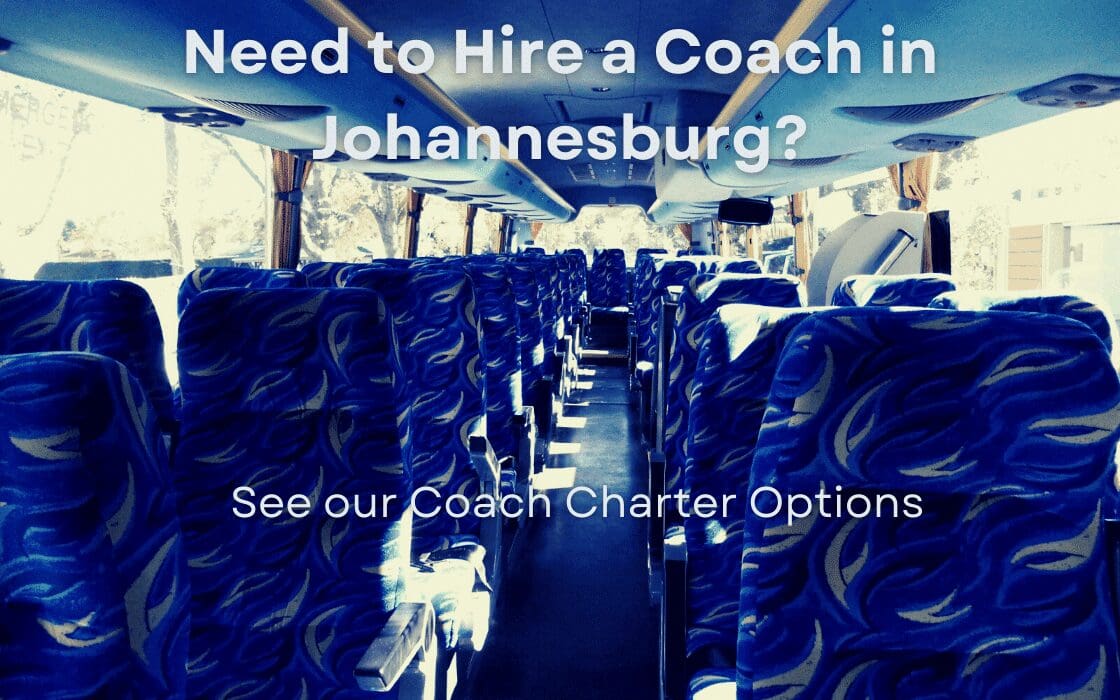
Integrated DVD & TV Displays: Full-sized luxury coaches feature ceiling-mounted LCD screens and media hubs for showing educational videos, corporate briefings, or movies on extended trips.
Chapter 5: Luggage Capacity & Restroom Logistics
Calculating storage space and deciding when your group needs an onboard toilet.
Running out of luggage space on departure morning is a tour planner’s worst nightmare.
Overhead cabin racks fill up fast, and forcing large suitcases onto passenger seats creates major safety hazards and uncomfortable seating.
To match your itinerary to the right storage setup and bathroom facilities, you need to evaluate:
-
Under-carriage luggage compartments vs. cabin overhead racks across different coach sizes
-
Lockable luggage trailers for high-baggage minibus and midibus transfers
-
Onboard toilet availability on full-sized luxury coaches versus smaller vehicles
-
Planned highway rest stops along major South African transit routes (N1, N3, and N4)
In this chapter, we will show you how to calculate your group’s luggage volume and decide if your route genuinely requires an onboard restroom.
Understanding Luggage Compartments Across Vehicle Sizes
Not all charter vehicles store baggage the same way. Matching your group’s luggage volume to the right vehicle layout prevents last-minute delays at pickup.
Reviewing options from a vetted list of top bus hire companies in Johannesburg ensures you get clear guidance on baggage limits, belly space, and trailer availability before departure day.
-
Executive Minivans (7–14 Seats): Small rear boots hold around 4 to 6 standard carry-on bags. If your group carries full-sized hard-shell suitcases or sports gear, requesting a lockable luggage trailer is mandatory.
-
Midibuses (18–32 Seats): Rear luggage compartments accommodate medium suit bags and soft duffels for up to 20 passengers. High-capacity luggage trailers are also available for school sports teams or tour groups.
-
Full-Sized Luxury Coaches (39–60+ Seats): These coaches feature massive under-floor belly compartments running the entire length of the chassis. They store large, 23kg checked suitcases for every passenger, keeping the main cabin completely clutter-free.
Overhead Cabin Racks vs. Main Storage
Inside the cabin, overhead parcel racks are designed strictly for personal hand luggage, small backpacks, laptops, and jackets. Storing heavy suitcases in overhead racks is dangerous during sudden braking. Keep main baggage safely stowed in under-floor bays before departure.
Do You Really Need an Onboard Toilet?
Onboard restrooms (or emergency toilets) are standard on most 39-seater to 60-seater luxury coach travel fleets. They are built primarily for emergency use on long-distance routes across South Africa.
For short transfers across Johannesburg, to place like the Sandton Convention Centre, or Pretoria, an onboard restroom is rarely necessary. Drivers schedule regular comfort breaks every two to three hours at major highway service stations along the N1, N3, and N4 corridors.
Having all this information upfront can be very helpful when booking your coach charter tour.
Chapter 6: Driver Safety Regulations & NRTA Compliance
Driver licensing, vehicle roadworthy checks, and mandatory rest hours under South African law.
Your passengers’ safety rests entirely in the hands of your driver and the mechanical health of the vehicle.
Cutting corners on safety regulations to save a few Rands puts your entire group at severe legal and physical risk on South African roads.
To verify that your charter operator meets strict legal road standards, you must check:
-
Professional Driving Permits (PrDP) for every driver behind the wheel
-
Vehicle Certificates of Fitness (COF) and valid provincial operating permits
-
National Road Traffic Act (NRTA) rest rules designed to eliminate driver fatigue
-
Dual-driver requirements for long-distance routes exceeding 8 hours or 500 kilometers
In this chapter, we will explain the essential legal compliance rules so you can ensure your group travels safely across South Africa.
Essential Driver and Vehicle Documentation
Before booking bus hire services in Johannesburg, ask the operator to confirm three essential legal documents:
-
Professional Driving Permit (PrDP): Under South African law, driving a public passenger vehicle requires a valid PrDP endorsement on the driver’s license. This requires regular medical checkups and police clearance.
-
Certificate of Fitness (COF): Commercial passenger vehicles must undergo mandatory annual roadworthy testing to receive a valid COF disc displayed on the windscreen.
-
Provincial Operating License: Charter companies must hold valid public transport permits authorizing passenger transit across provincial borders.
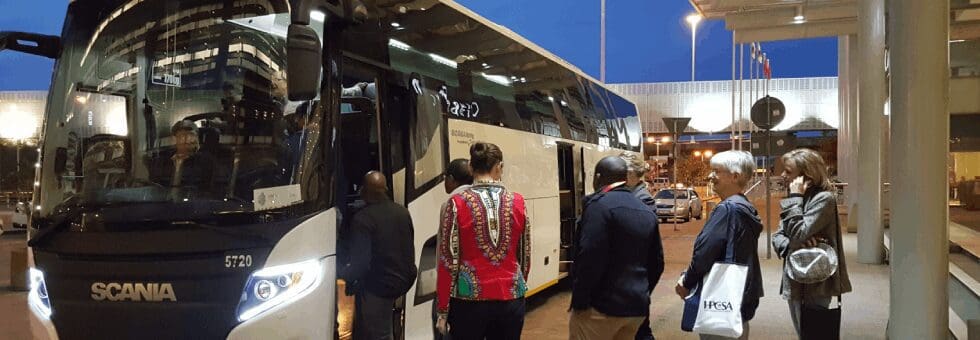
Mandatory Driver Rest Rules Under the NRTA
Driver fatigue is a primary cause of long-distance road accidents. Regulations under the South African National Road Traffic Act (NRTA) enforce strict limits on driver hours:
| NRTA Safety Requirement | Legal Operating Standard |
| Continuous Driving Limit | 5 Hours maximum (or 400 km) continuous driving before a break |
| Mandatory Rest Break | Minimum 30 minutes accumulated rest every 5 hours |
| Daily Driving Maximum | 10 to 12 Hours total driving in a 24-hour period |
| Compulsory Shift Rest | Minimum 9 consecutive hours of off-duty sleep between shifts |
| Dual Driver Relays | Mandatory on continuous trips exceeding 500 km or 8 hours driving |
Working with certified operators who follow NRTA regulations protects your passengers and guarantees reliable service from origin to destination.
Chapter 7: How Bus Hire Pricing Works: Rates, Mileage & Hidden Costs
How quotes are calculated, what affects your total, and avoiding unexpected fees.
Navigating charter vehicle rates in South Africa can feel confusing if you do not know how local transport companies build their quotes. Clear pricing structures prevent budget overruns and ensure your trip runs without financial surprises.
-
Daily flat rates vs. per-kilometer pricing for local city transfers versus overland touring
-
SANRAL highway toll fees along major Gautrain and interprovincial corridors like the N1, N3, and N4
-
Driver accommodation and meal allowances required on multi-day itineraries
-
Fuel surcharges and overtime rates when schedules run over agreed time limits
In this chapter, we walk you through how operators build your quote so you can budget accurately and avoid unexpected charges on departure day.
1. Daily Flat Rates vs. Per-Kilometer Pricing
Charter bus pricing in Gauteng generally follows two core models:
-
Local City Transfers: Charged at a daily or half-day flat rate. These packages cover a set number of hours (usually 5 to 10 hours) and include a local mileage allowance of 100 to 200 kilometers.
-
Overland Long-Distance Hires: Charged either per kilometer or as a multi-day rate. For extended trips to places like Kruger National Park or Sun City, pricing combines a daily vehicle base fee with a rate per extra kilometer driven (typically R20 to R60 per km based on coach size).
When reviewing rates for bus hire in Johannesburg, always check whether your quote includes depot-to-depot routing. This measures the distance the coach travels from its home garage to your pickup location and back after final drop-off.
2. Highway Toll Fees Across National Corridors
Commercial charter coaches carry 2, 3, or 4 axles, placing them in heavy vehicle toll classes (Class 2, 3, or 4). Tariff costs add up quickly on major South African highways:
-
N1 North (Johannesburg to Polokwane): Features multiple mainline toll plazas like Pumulani and Carousel.
-
N3 South (Johannesburg to Durban): Passes through heavy-vehicle toll gantries at De Hoek, Wilge, Tugela, and Mooi River, where total toll fees can reach over R1,300 each way for a large coach.
-
N4 East & West (Pretoria to Nelspruit or Rustenburg): Involves high-density toll gates like Machadodorp.
Always confirm if your quote includes automated e-Tag toll charges upfront or if your company will receive a separate bill for tolls after the trip finishes.
Standard Charter Rates Breakdown
| Charter Trip Type | Included Time / Distance | Coach Size Category | Typical Market Rate (ZAR) |
| Local Half-Day Transfer | Up to 5 hours / 100 km | 13–32 Seater Minibus/Midibus | R 5,500 – R 12,900 |
| Local Full-Day Transfer | Up to 10 hours / 200 km | 35–60 Seater Touring Coach | R 8,500 – R 15,000 |
| Overland Multi-Day Tour | Per 24-hour day / 300+ km | 60 Seater Luxury Coach | R 8,500 – R 15,000 / day |
| Hourly Overtime Rate | Billed per extra hour | All Vehicle Sizes | R 650 – R 1,500 / hour |
3. Driver Lodging and Daily Meal Allowances
Under South African road safety laws, commercial drivers cannot exceed maximum driving hours without mandatory rest. For any trip requiring an overnight stay outside Gauteng, your organization must handle driver expenses:
-
Private Room Accommodation: You must provide the driver with a private, single room with en-suite facilities. Sharing rooms with passengers or having drivers sleep inside the coach is strictly prohibited.
-
Daily Meal Allowances: Your group can either invite the driver to join scheduled group meals or pay a daily meal allowance (usually R250 to R400 per day).
4. Overtime Rates and Fuel Surcharges
Schedule delays are common during large events. If your meeting or excursion runs past your agreed return time, overtime fees apply automatically at an hourly rate.
Additionally, fuel price changes can impact long-distance luxury coach travel costs. Most operators lock in your quote once your deposit is paid, protecting your budget against sudden price increases on departure week.
Chapter 8: How to Choose a Reliable Bus Service Provider in Johannesburg
Evaluating operational experience, driver professionalism, and service quality beyond baseline paperwork.
While baseline legal compliance and roadworthy certificates are mandatory defaults, true peace of mind comes down to operational experience and service excellence.
To evaluate an operator’s real-world reliability, you need to look beyond basic paperwork and assess:
-
Driver vetting and PrDP standards coupled with defensive driving and professional etiquette
-
Proven track record and event experience across major Gauteng routes, venues, and interchanges
-
Active fleet operations and 24/7 dispatch support during schedule shifts or airport delays
-
Rigorous vehicle presentation, interior hygiene, and preventative maintenance discipline
In this chapter, we will show you how to vet a charter operator based on quality, professionalism, and operational performance so your group receives a seamless experience.
1. Driver Vetting: Active PrDP Compliance Meets Professional Etiquette
Operating a passenger charter on South African roads legally requires a driver to hold a Category P Professional Driving Permit (PrDP) alongside their heavy vehicle license. This endorsement proves the driver has cleared routine medical health evaluations and secured clean background screening through the South African Police Service.
Top-tier operators treat the PrDP as the starting baseline rather than the entire standard. When evaluating the best coach hire companies, look for providers who invest in ongoing driver development:
-
Defensive Driving Certification: Continuous training in heavy vehicle handling, wet-weather braking, and highway emergency maneuvers along high-density routes like the N1, N3, and N4.
-
Route & Venue Familiarity: Drivers who know designated coach staging zones, bus height clearance limits, and loading bays at major hubs like Sandton Convention Centre, OR Tambo International Airport, and Kyalami.
-
Professional Conduct & Appearance: Neatly uniformed, punctual drivers trained in customer service who communicate clearly with tour leaders and assist passengers with heavy luggage.
2. Proven Track Record in Complex Gauteng Logistics
Transporting a group smoothly across Johannesburg requires local experience. Experienced operators navigate peak-hour highway bottlenecks, venue access restrictions, and strict departure windows without hassle.
When vetting an operator, evaluate their experience handling similar trip profiles:
| Event / Trip Profile | Operational Expertise Required |
| Large Corporate Conferences | Synchronized multi-vehicle shuttle loops, precise staging at convention centers, and real-time delegate tracking. |
| Overland Safari Transfers | Highway endurance driving, scheduled rest stops, and handling multi-day luggage loads for international tour groups. |
| Sports & Fan Transfers | Navigating high-security stadium perimeters, crowd traffic management, and quick post-event pickup staging at places like Emirates Airline Park. |
Providers specializing in high-capacity touring coach charter options with a documented history of executing high-profile events bring proven systems to keep your schedule on track.
3. Active Fleet Tracking & 24/7 Control Room Support
A great charter service extends beyond the driver behind the wheel. Flight delays, sudden weather changes, and road closures around Gauteng require proactive backend management.
Ask prospective charter providers how their operations team handles live trip monitoring:
-
GPS Telematics & Live Tracking: Real-time speed monitoring, route tracking, and driver fatigue alerts managed from a central control hub.
-
24/7 Dedicated Dispatcher: Direct access to an operational duty manager who can adjust pickup times or reroute coaches during unexpected delays, rather than leaving logistics solely on the driver’s phone.
-
Rapid Standby Contingency: Clear standby protocols and cross-fleet partnerships that can dispatch a replacement vehicle within 60 to 90 minutes inside Gauteng if a mechanical issue arises.
Chapter 9: Step-by-Step Booking Timeline & Pre-Trip Checklist
Lock in your fleet, confirm itinerary details, and run a smooth departure day.
Securing group transportation requires clear coordination. Leaving your transport arrangements to the last minute reduces vehicle options and increases booking costs.
-
Optimal booking lead times during peak Gauteng travel seasons
-
Headcount and luggage verification before requesting final quotes
-
Formal contract confirmation and deposit payment timelines
-
Pre-departure driver contact and route re-verification
In this chapter, we will give you a 5-step checklist to guide you from initial inquiry to final drop-off.
The 5-Step Pre-Trip Booking Checklist
Follow this step-by-step timeline to manage your booking efficiently and prevent unexpected issues on departure day:
Managing Peak Travel Seasons in Gauteng
Timing plays a vital role when planning group trips across South Africa. Demand for charter vehicles peaks during specific periods:
-
School Terms & Holidays (March/April, June/July, September, December): Schools and sports clubs reserve large midibuses and coaches months in advance.
-
Corporate Conference Season (October to November): High demand for luxury touring coaches and corporate shuttles around Sandton, Midrand, and Pretoria.
-
Festive Season (December to January): Church groups, family reunions, and holidaymakers book out overland fleets.
During peak travel periods, reserve your vehicle at least 8 to 12 weeks in advance to secure preferred rates and vehicle models.
Conclusion: Ready to Book Your Group Transport in Johannesburg?
Elevating Group Travel Through Precision Planning and Premium Fleet Logistics.
Planning group transportation in Gauteng does not have to be stressful. By matching your headcount to the right vehicle class, ensure that you check that the Tour Operator’s safety compliance. This addresses key group transit planning questions upfront, you ensure a smooth, cost-effective journey for every Passenger.
Whether you are coordinating corporate shuttles to the Sandton Convention Centre, organizing a school outing, or planning an overland safari transfer to Kruger, taking time to organize your logistics early guarantees the best rates and vehicle availability.
Frequently Asked Questions (Premium B2B & Group Planner FAQ)
1. How do cross-border permits work for multi-country itineraries originating in Johannesburg?
For charters extending beyond South African borders (e.g., tours entering Eswatini, Botswana, or Mozambique), coaches must carry valid Cross-Border Road Transport Agency (C-BRTA) permits alongside cross-border vehicle insurance and customs clearing documentation. Drivers hold valid passports and international driving endorsements. When requesting a cross-border quote, itineraries must be submitted in advance to ensure all inter-state transport compliance is fully executed prior to departure.
2. What driver vetting, PDP standards, and statutory rest hour limits are enforced?
Every driver holds a valid Professional Driving Permit (PrDP) and undergoes regular medical fitness examinations and advanced defensive driving assessments. To ensure maximum road safety, strictly mandated driving hours apply:
-
Drivers are limited to a maximum of 10 hours of active driving per day.
-
A mandatory 30- to 45-minute rest break is required every 2 to 3 hours of continuous highway driving.
-
For long-distance overnight legs (exceeding 600 km), a secondary co-driver is stationed on board or relay transfers are arranged.
3. How are flight delays and group arrivals managed for airport transfers at OR Tambo or Lanseria?
Dispatch controllers track real-time flight telemetry for all inbound corporate groups. If a flight is delayed or landing time shifts, driver staging schedules at OR Tambo or Lanseria International Airport are automatically recalibrated to prevent unnecessary waiting charges. Dedicated airport staging agents can also be assigned to greet delegates at international arrivals and escort them directly to the private coach bay.
4. How are Gauteng SANRAL e-tolls, national toll plazas, and venue parking handled?
All toll fees, including SANRAL Gauteng e-tolls on the N1, N3, and A3 highways as well as regional toll plazas—are calculated and integrated into your master quotation. The driver operates with pre-fitted e-tags to ensure uninterrupted travel through toll gantries. Parking fees at private venues, airports (OR Tambo / Lanseria), or conference centres can either be prepaid or settled directly on site depending on account arrangements.
5. What are the requirements for driver accommodation and meals on overnight charters?
For multi-day itineraries extending beyond Gauteng, group planners must cover the driver’s accommodation and daily meals. This requires booking a private, single-occupancy room—typically at a comfortable 3-star standard or better—along with providing three meals per day or an equivalent daily stipend. Securing proper resting quarters guarantees your driver stays alert and recharged, keeping your trip fully aligned with national transport safety laws.
6. What on-board AV, PA systems, and power capabilities are available for executive presentations?
Full-luxury coaches come standard with:
-
Public Address (PA) systems with roving or fixed microphones for tour guides and event hosts.
-
Integrated DVD media monitors throughout the cabin.
-
High-speed USB charging ports at passenger seats.
7. How are high volume luggage and specialized event gear accommodated?
Full-size luxury coaches (44–60 seaters) feature spacious under-floor luggage bays capable of accommodating standard large suitcases and carry-ons for all passengers. For smaller midi-coaches (22–28 seaters) or trips involving extensive equipment (e.g., sports gear, golf bags, filming equipment), a lockable, weatherproof luggage trailer can be attached complimentary or upon request.
8. What is the policy regarding alcohol consumption and catering on board?
-
Alcohol: Allowed only upon prior written consent from the charter operator under strict conditions (e.g., private corporate functions). Glassware is strictly prohibited; all beverages must be served in plastic or aluminum containers.
-
Catering: Cold snacks and bottled water are permitted. Operators request that hot meals or messy foods be avoided to preserve vehicle cleanliness.
9. What breakdown contingency guarantees and roadside support are provided?
All vehicles undergo rigorous pre-departure mechanical inspections. In the event of a mechanical fault en route, operators maintain 24/7 dispatch protocols and nationwide breakdown support networks. A replacement coach of equal standard will be dispatched from the nearest operational depot in Johannesburg or regional hubs to minimize itinerary delays.
10. Are your charter coaches accessible for passengers using wheelchairs or mobility devices?
Our standard fleet consists of classic touring coaches with elevated cabins accessed via entrance stairs. We do not operate vehicles equipped with motorized hydraulic lifts or floor ramps for power wheelchairs.
However, if passengers can navigate the entry steps with assistance to take a standard seat, our drivers are happy to help, and foldable manual wheelchairs or walkers can be safely stowed in the under-floor luggage bay free of charge. For passengers requiring fully adapted, lift-equipped transport, we recommend contacting specialized accessible transport operators in Gauteng, and our team can gladly refer you to dedicated service providers upon request.
11. Can corporate event organizers inspect the allocated vehicle fleet prior to booking?
Yes. Corporate travel procurement teams, event coordinators, and school administrators are welcomed to conduct a physical pre-booking fleet inspection at the Johannesburg depot. This allows verification of vehicle condition, seat spacing, cleanliness standards, and safety infrastructure before locking in contract agreements.
12. What are the deposit schedules, peak season lead times, and cancellation terms?
-
Booking Lead Time:
Peak corporate and holiday travel seasons (September to December and March/April) require booking 4 to 8 weeks in advance.
-
Payment Terms:
A 20%–25% deposit secures the fleet allocation upon confirmation, with the remaining balance due 7 to 14 days prior to departure
via EFT. -
Cancellation Policy:
-
50% Cancellation Fee: Applies to any cancellations made after 15:00 on the day prior to your scheduled trip.
-
100% Cancellation Fee: Applies to any cancellations made on the day of your scheduled trip.
-
Now we would like to hear from you:
Are you ready to lock in your fleet for an upcoming event? Contact our booking team today to get an instant, custom quote for your group trip across Johannesburg and Gauteng.